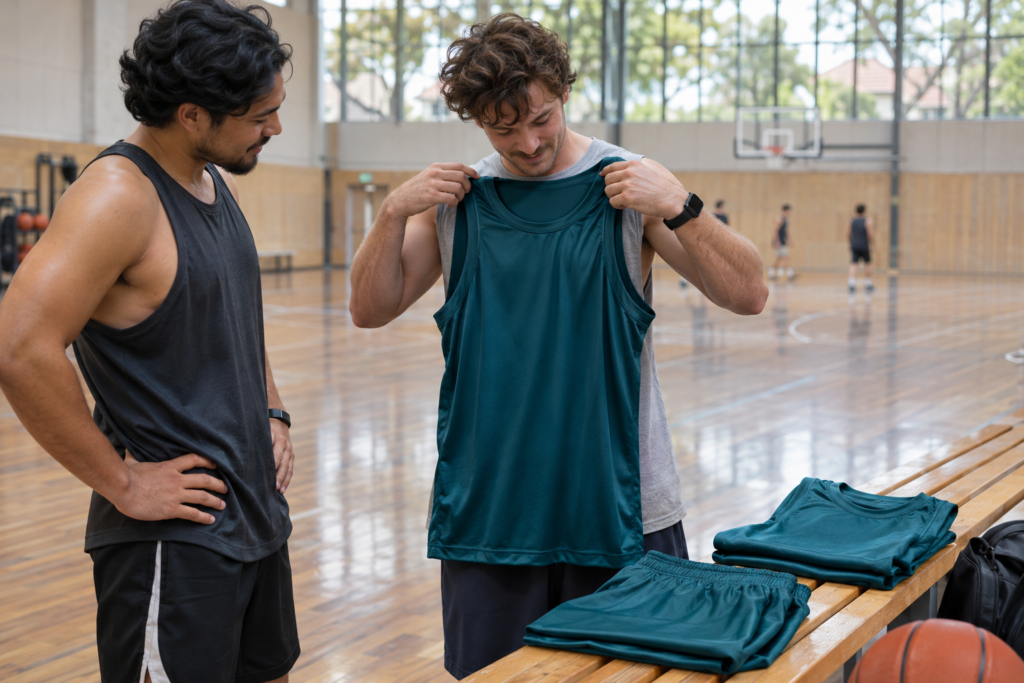
For a Melbourne club putting together a new squad, a basketball uniform order starts with a roster, a set of player numbers and a date for the first game. Getting those details together early gives the team manager time to organise a fitting and check the competition rules. If the club is ordering from a new supplier, a local search for basketball uniforms melbourne can help the manager find options and ask about samples, delivery dates and the cost of ordering extra sets later.
Check the competition rules before choosing a design
The team manager can start with the current rules for the competition the squad has entered. The details worth checking include where numbers need to appear, whether the team needs an alternate colour and whether players can wear their own shorts. A club entering teams in different competitions can check each set of requirements before deciding whether to order the same kit across all grades.
Number legibility is also worth checking on the design proof. A pale number over a light section of a patterned jersey can be hard to read from the scorebench. A contrasting number on a plain panel is easier to pick out. If the club has returning players who will keep their jerseys, the manager can record their numbers first and allocate the remaining numbers to new players before sending the order.
Organise a fitting before collecting sizes
A set of sample garments at training lets players check how the kit feels when they move. A jersey can seem comfortable while a player is standing still, then pull around the shoulders when they raise their arms to shoot. Players can try a few movements they make on court, including reaching overhead, bending into a defensive stance and taking a long stride. It helps to record top and shorts sizes separately if the supplier offers that option.
For anyone who misses the fitting, the manager can share the supplier’s size chart and check whether it shows body measurements or the dimensions of the finished garment. If it shows garment dimensions, the player can lay a jersey they already wear flat and measure it the same way. That gives them a starting point when choosing between two sizes. With a junior team, a little room for growth can help, provided the kit still sits comfortably during play.
Confirm the order and work back from game day
A single roster makes the final check easier. Each row can show the player’s name, jersey number, top size and shorts size, along with the exact spelling of any name to be printed. A second person can cross-check that roster against the final design proof and order confirmation. Duplicate numbers, swapped sizes and missing names are easier to fix at this point than when the team opens the delivery.
The order deadline needs to leave time for artwork approval, production and delivery, plus a chance to hand out the kit at training. The manager can ask when the production window starts, especially if the supplier waits for both approval and payment. When comparing quotes, clubs can check the delivered price for the same number of sets and confirm what it includes, such as design changes, player names and freight.
Plan for replacements and late registrations
A new player may join after the first game, or a jersey may go missing halfway through the season. Before placing the main order, the manager can ask whether the supplier makes single replacements, whether a minimum quantity applies and how long a repeat order usually takes. If the club keeps spare jerseys, recording their sizes and numbers makes it easier to issue one without duplicating a number already in use.
Clubs can check sizes, confirm player numbers and allow time for delivery before placing a team kit order for the first game of the new season. Keeping the approved artwork and order details together also gives the next team manager a record to use when a player needs a replacement.