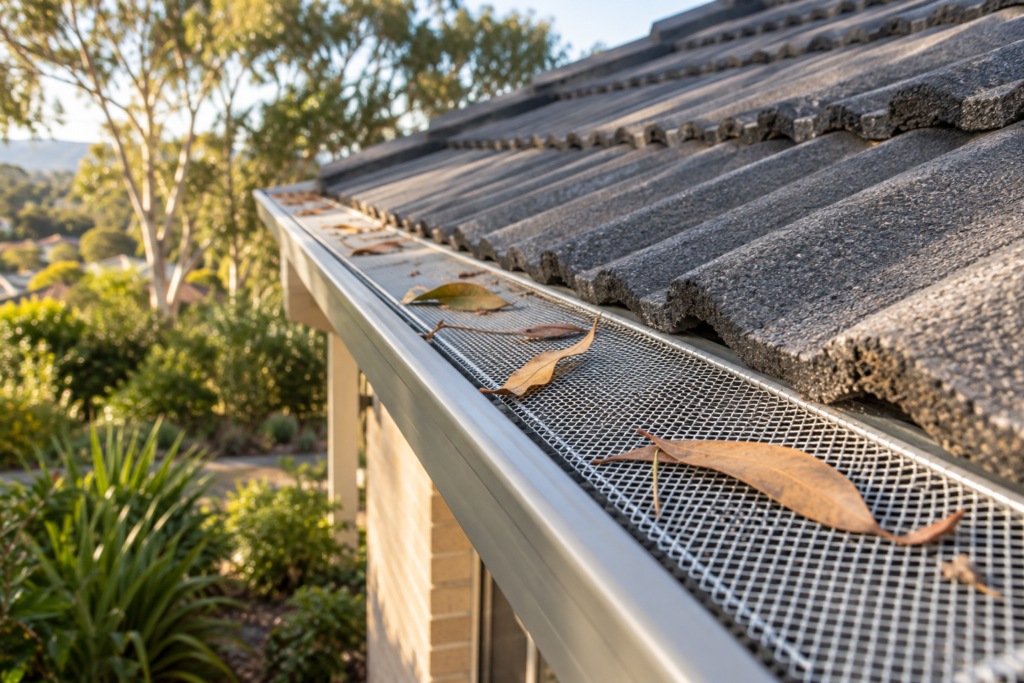
Gutters beneath trees can collect leaves and twigs quickly, especially after wind or a storm. An aluminium gutter guard can help keep larger debris out while allowing rainwater to reach the gutter. The size and shape of the openings in aluminium mesh matter when a property has fine leaves or small seeds nearby. In a bushfire-prone area, a homeowner considering bushfire mesh also needs to check whether the proposed product and installation suit the property’s applicable requirements.
Start with the roof and surrounding trees
The right mesh depends partly on what falls onto the roof. Broad leaves, pine needles, blossoms and small seeds behave differently when rain and wind move them across a surface. A sample held against the debris commonly found on the property can reveal more than a product photo alone.
The roof matters too. A steep roof may shed leaves differently from a low-pitched one, while valleys can concentrate water and debris in a small area. The gutter profile, roof covering and position of the gutter all affect how a guard can be fitted. A product that looks suitable in isolation still needs to work with those existing details.
Homeowners should identify where blockages occur before requesting a quote. Downpipe entries, roof valleys and sections beneath overhanging branches are useful places to inspect. If water already pools in a gutter because it has poor fall or a damaged outlet, covering it will not correct that underlying problem.
Check how water and debris will move
A guard is intended to let water through while limiting the debris that enters the gutter. The practical question is what happens when a heavy shower carries leaves towards it. Some debris may wash or blow away; some may remain on top and need to be removed.
Opening size deserves attention, but smaller openings are not the only consideration. The mesh, its position on the roof and the way it is fixed all influence how water enters the gutter. Homeowners can ask an installer to explain how the proposed system deals with heavy rain, roof valleys and the debris found at their property.
It is also worth asking how the gutters will be inspected after installation. A covered gutter can still need maintenance. Fine material may collect over time, and leaves sitting above a guard should be cleared before they form a dense layer. Access for future cleaning should be part of the decision.
Treat bushfire preparation as a separate check
Leaves and twigs in gutters can provide fuel for wind-blown embers. The NSW Rural Fire Service recommends cleaning gutters and installing metal gutter guards as part of preparing a home for bushfire. The Australian Government’s Your Home guide also identifies debris in gutters as a place where embers can ignite material.
Those recommendations do not mean every metal guard is suitable for every bushfire-prone property. Requirements can depend on the building and its assessed bushfire exposure. Before purchasing, a homeowner should confirm the relevant requirements for the property and ask for documentation showing that the proposed product and installation meet them.
A guard is only one part of preparation. Leaves can still gather on top of mesh, in roof valleys or around other parts of the house. Regularly clearing debris and following local fire authority advice remain important after installation.
Ask useful questions before installation
A detailed quote should identify the material being supplied, the areas to be covered and how the guard will be fixed. It should also explain whether existing gutters need cleaning or repairs first. Without that preparation, an installation could conceal a blockage that was already there.
Homeowners can ask how the installer will handle corners, valleys and downpipe openings, as well as how those areas can be checked later. Where bushfire requirements apply, they should request the relevant product details in writing rather than relying on a general description such as “fire safe”.
The most useful choice is one made for the particular roof, trees and conditions around the home. Careful fitting and ongoing inspection help the guard do its everyday job, while property-specific advice helps homeowners make an informed decision about bushfire preparation.